
When AI Becomes a Media Channel
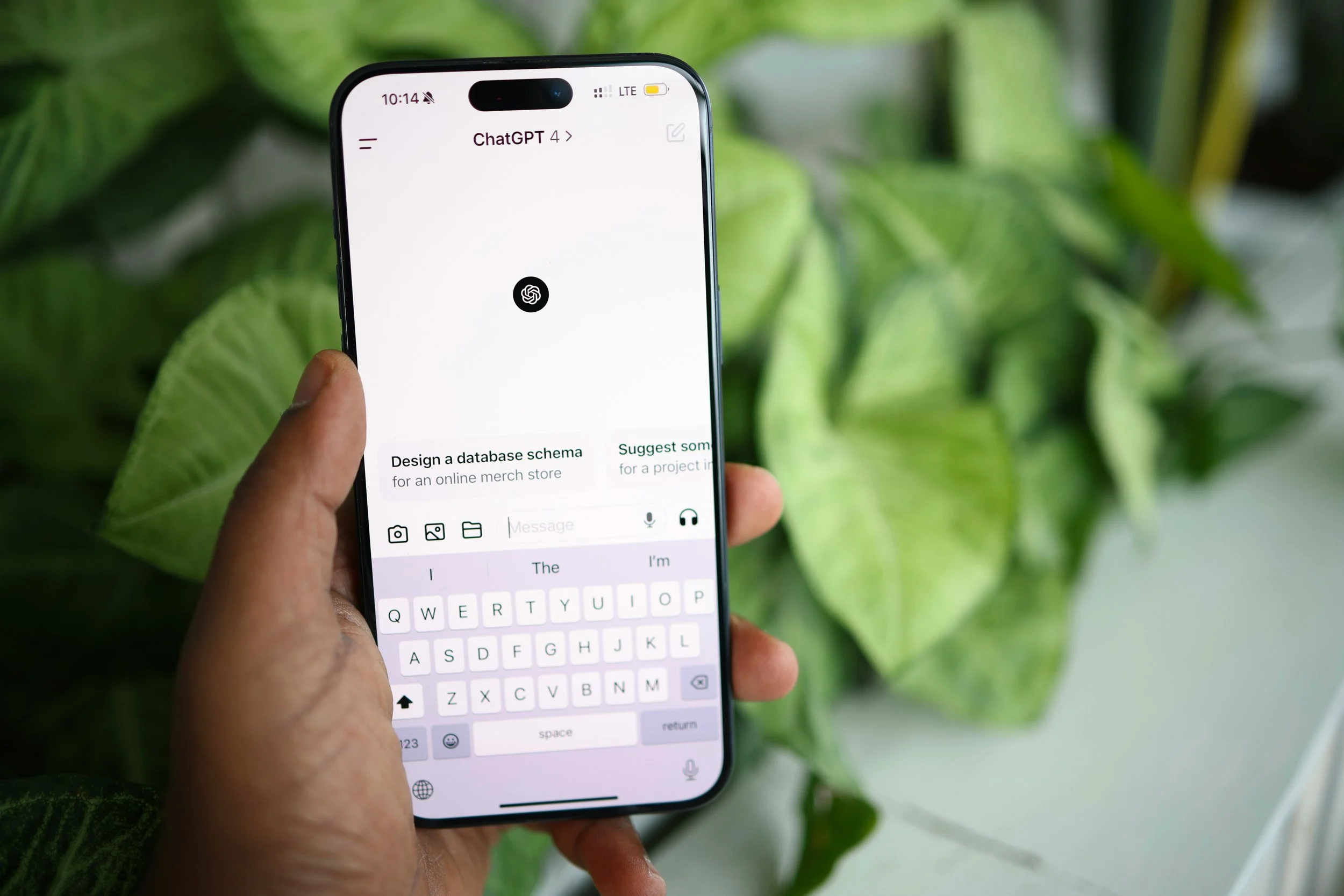
The announcement landed quietly, almost casually, yet it carries the kind of weight that reshapes careers and categories. On January 16, the long-speculated move became official. Paid advertising is coming to ChatGPT. For marketers who have watched AI move from novelty to daily utility in record time, this felt less like a surprise and more like an inevitability finally catching up with reality.
Every major shift in media has followed a similar arc. The open web introduced banners that no one quite understood at first. Search advertising rewired how intent was valued. Streaming forced television and radio to rethink reach, frequency, and measurement. Each wave arrived with bold promises, early missteps, and a handful of advertisers willing to learn in public. This moment fits squarely into that lineage, and it puts media buyers back where they thrive most: at the edge of uncertainty, separating real opportunity from noise.
What Paid Ads Actually Mean Inside ChatGPT
The instinctive reaction is to assume a seismic shift on day one. History suggests otherwise. New platforms rarely deliver outsized performance immediately, especially when user trust is central to the experience. ChatGPT is not a feed, a scroll, or a destination built around discovery in the traditional sense. It is a utility. People arrive with a task, a question, or a problem they want solved quickly.
That context matters. Advertising inside a utility behaves differently than advertising inside entertainment or social environments. Relevance becomes non-negotiable, and intrusion is punished swiftly. OpenAI appears to understand this tension. Early signals suggest ads will be clearly separated from organic responses and limited to certain user tiers, notably free users and those on lower-cost plans. This immediately narrows reach, but it also preserves the integrity of the core experience, which is essential for long-term viability.
From a planning perspective, the unanswered questions are more important than the announced features. How much control will advertisers have over targeting and creative? Which categories will be allowed, and which will be restricted? How will brand safety be enforced in an environment where answers are generated dynamically? None of these questions have satisfying answers yet, and that uncertainty should not be mistaken for risk alone. It is also where early learning happens.
How These Ads Are Likely to Appear
Based on what has been shared so far, initial ad placements will live at the bottom of ChatGPT responses. The closest analog is paid search. A user asks a question, receives an answer, and then sees sponsored content that is contextually aligned with that query. The difference is subtle but meaningful. Unlike traditional search, the answer itself is synthesized, not sourced from a list of links. That shifts the role of the ad from being one option among many to being a next step after information has already been delivered.
OpenAI has stated that ads will be visually distinct from organic content, a necessary move to maintain transparency and trust. Over time, the company has hinted at more interactive formats, including conversational or chat-enabled ad experiences. If executed well, this could unlock an entirely new creative canvas. Brands could move beyond static copy and into guided, helpful interactions that feel more like service than promotion.
That potential should be approached carefully. Interactive ads demand restraint. Too much brand voice, too much friction, or too much sales pressure will undermine the value proposition instantly. The brands that succeed will be the ones that understand when to speak and when to stay quiet.
Why Caution Is the Smart Play Early On
It is tempting to chase first-mover advantage aggressively. The phrase itself has sold many a pilot program that never scaled. Experience teaches a more measured approach. Early versions of Google Performance Max promised automation nirvana and delivered uneven results until advertisers learned how to feed the machine properly. The same pattern played out with programmatic audio, connected TV, and retail media networks.
ChatGPT advertising will be no different. There will be limitations, learning curves, and moments where performance lags expectations. That does not diminish the value of early testing. It reframes its purpose. Initial investment is about education, not efficiency. It is about understanding how users react, how creative is interpreted, and how the platform itself evolves in response to advertiser behavior.
Being present from the beginning allows media teams to grow alongside the platform rather than scrambling to catch up later. It sharpens instincts, informs future strategy, and builds a working knowledge that cannot be replicated through case studies alone.
Brand Safety and Trust in an AI-Driven Environment
Brand safety has always been a moving target, but AI introduces a new layer of complexity. When content is generated in real time, adjacency is no longer static. Advertisers will need clarity on how prompts, responses, and sponsored content interact. They will also need confidence that their messages will not appear alongside harmful, misleading, or sensitive outputs.
This is where partnerships and transparency matter. Platforms that succeed in advertising do so because they align incentives between users, advertisers, and the business itself. If ads degrade trust, users leave. If controls are too restrictive, advertisers disengage. The balance will take time to strike, and those early months will reveal whether OpenAI can navigate it effectively.
What This Means for the Future of Media Planning
ChatGPT ads are not a replacement for search, social, or any existing channel. At least not yet. They represent a new layer in the media ecosystem, one that sits closer to intent and problem-solving than discovery or entertainment. That distinction should guide planning decisions.
For some brands, particularly those in education, software, finance, and complex services, the alignment could be powerful. For others, the fit may be limited or nonexistent in the near term. Discernment will matter more than enthusiasm.
The larger signal is impossible to ignore. AI is no longer just influencing how people create and consume content. It is becoming a monetized media environment in its own right. That reality will shape how budgets are allocated, how creative is developed, and how success is measured in the years ahead.
The smartest move right now is not to overreact or underinvest. It is to pay attention, test with purpose, and learn faster than the market. Platforms will change. Formats will evolve. What remains constant is the value of experience earned early and applied thoughtfully. That is how revolutions become advantages rather than disruptions.